
Recording
Tracking Drums

Duration:2h28 Subtitles: English, Spanish, Portuguese
Description
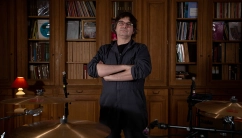
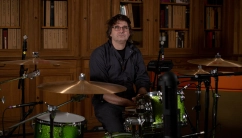
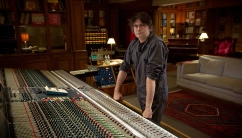
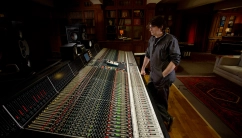
Join us at Studios La Fabrique for a comprehensive tutorial on drum recording techniques! Hosted by the legendary rock engineer Steve Albini, this video series dives into great detail on tracking a drum kit in fully analog fashion with a Neve 88R console and Studer A800 MKIII tape machine. Albini takes you through his microphone preferences and positioning for bass drum, snare, toms, overheads, stereo drum kit, and room ambience. He gives concise reasoning for the types of microphone used and their placement, while suggesting suitable alternatives. Furthermore, he reveals his clever processing techniques to reduce bleed, enhance natural reverb, control dynamics, optimise phase relationships, and more. He demonstrates the use of his techniques by recording a live drummer, and draws diagrams on a white board to clearly impart his extensive knowledge!
Show more
Show less
-
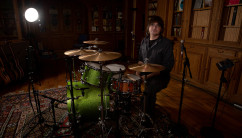 25 min
Bass drum – resonant & beater side, attack & sustain, mic preferences, phase, signal ducking
-
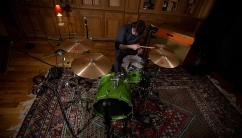 16 min
Snare – top & bottom side, condenser vs. dynamic mics, separation, positioning, expansion
-
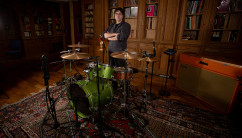 16 min
Toms – perspective, mic pairs, level blending, summing, polarity, mic preferences
-
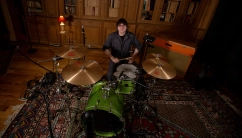 12 min
Overheads & Stereo Room – cymbal capture, high end detail, peak limiting, Blumlein
-
 13 min
Ambient Pair – distance, bandwidth, elevation, Haas effect, boundary principle, delay
-
 05 min
Internal phase relationships, absolute & microphone polarity, amplifier stages
-
 21 min
Signal flow to console & tape, VU & peak metering, processing, calibration, recording
-
 08 min
Compressor circuitry, parameters, preferred settings, limiting, dual mono vs. stereo
-
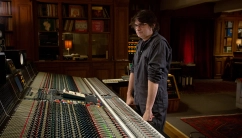 12 min
Room ambience, studio design, reflections, acoustic treatment, symmetry, material
-
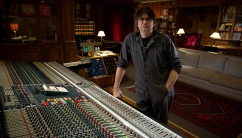 04 min
Demonstration of simplified recording setup using only three microphones
-
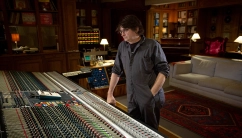 11 min
Diagrams of ambient mic positioning with regards to boundary principle & Haas effect

About Steve Albini
Steve Albini was a well-known engineer, mixer, and studio owner who lived and worked at Electric Audio studio in Chicago, Illinois. Steve Albini was also the guitarist and main singer of the grunge band Shellac. Albini continued to work almost entirely in the analogue domain, being known for recording "live in the studio" as much as possible. He also placed particular emphasis on the selection and use of microphones in achieving a desired sound, and to best capture the ambience. In 2004, Albini...
No resources available
-
25 min
Bass drum – resonant & beater side, attack & sustain, mic preferences, phase, signal ducking
-
16 min
Snare – top & bottom side, condenser vs. dynamic mics, separation, positioning, expansion
-
16 min
Toms – perspective, mic pairs, level blending, summing, polarity, mic preferences
-
12 min
Overheads & Stereo Room – cymbal capture, high end detail, peak limiting, Blumlein
-
13 min
Ambient Pair – distance, bandwidth, elevation, Haas effect, boundary principle, delay
-
05 min
Internal phase relationships, absolute & microphone polarity, amplifier stages
-
21 min
Signal flow to console & tape, VU & peak metering, processing, calibration, recording
-
08 min
Compressor circuitry, parameters, preferred settings, limiting, dual mono vs. stereo
-
12 min
Room ambience, studio design, reflections, acoustic treatment, symmetry, material
-
04 min
Demonstration of simplified recording setup using only three microphones
-
11 min
Diagrams of ambient mic positioning with regards to boundary principle & Haas effect